English
Please Choose Your Language
Seeking excellence/solutions from China    |    ABOUT US   |    BLOG   |    CONTACT US
You are here: Home / Blog / Research on the pet industry / How to Care for Newborn Puppies: 11 Essential Tips

BLOG SEARCH

How to Care for Newborn Puppies: 11 Essential Tips

Views: 0     Author: Site Editor     Publish Time: 2026-01-28      Origin: Site

Inquire

facebook sharing button
twitter sharing button
line sharing button
wechat sharing button
linkedin sharing button
pinterest sharing button
whatsapp sharing button
kakao sharing button
snapchat sharing button
telegram sharing button
sharethis sharing button
How to Care for Newborn Puppies: 11 Essential Tips

The first few weeks of a puppy’s life are extremely vulnerable. After leaving their mother’s womb, they rely on her for milk, warmth, and bodily care, while facing constant risks of illness, infection, and injury. Survival is not easy for newborns, but in most cases, mother dogs meet all their pups’ needs perfectly. Occasionally, however, you may need to step in and care for weak or neglected puppies.

Part 1: Caring for Weak or Neglected Puppies

puppy

1. Keep Weak Newborn Puppies Warm

If you find a puppy needing special care, the first step is to ensure it stays warm. Hypothermic puppies cannot nurse properly, risking severe dehydration and hypoglycemia—both life-threatening.
  • Use a hot water bottle filled with warm (not boiling) water, placed at the bottom of a small box and covered with a towel. Lay the puppy on top and cover it with a thin cloth.

  • Another method: hold the puppy against your chest, inside your clothing, until it warms up. Use a clean cloth to protect against accidents.

  • Avoid standard heating pads, as they can cause overheating and burns. If using a pet-specific heating pad, always place a towel between the pad and the puppy.

  • Warm the puppy gradually over 1–3 hours. Rapid warming can cause overheating. If the puppy pants with its mouth open, it is too hot.

2. Take the Puppy’s Temperature

Once the puppy seems warm, use a pediatric digital thermometer to take its rectal temperature. Apply a small amount of lubricant to the tip and insert gently into the anus.
  • A temperature below 94°F (34.4°C) means the digestive system cannot function.

  • For puppies under seven days old, do not let the rectal temperature exceed 99°F (37.2°C), to avoid overheating.

  • Record the temperature in the same notebook or spreadsheet you use for weight tracking.

3. Help the Puppy Nurse

When the puppy is warm and active, attempt feeding. Check if the mother allows the puppy to latch onto a nipple. Colostrum—the first milk—is vital, as it contains antibodies that build the puppy’s immune system.


You may need to separate the weak puppy from its littermates briefly, keeping them nearby but away from the mother, so the smaller one can nurse undisturbed.

4. Boost the Puppy’s Blood Sugar

If the puppy is warm but still too weak to nurse, it may have hypoglycemia. Place 2–3 drops of corn syrup on its tongue to help raise blood sugar.
Signs of hypoglycemia in newborn puppies include:
  • Weakness and lethargy

  • Shaking and tremors (distinguish from normal newborn twitches)

  • Convulsions

  • Unresponsiveness or unconsciousness

5. Supplement with Puppy Milk Replacer

If the puppy is warm and willing to suckle but the mother rejects it or it cannot latch, use a vet-recommended puppy milk replacer, available at vet clinics or trusted pet stores. Feed with a puppy bottle or syringe.


Mix according to the instructions and test the temperature—it should be warm, not hot, like formula for a human baby. Consult your vet if you are unsure which formula to use.

6. Establish a Regular Feeding Schedule

Weak newborns require feeding every 3–4 hours, including throughout the night. Divide the daily total feeding amount (per the formula label) by the number of daily feedings.


  • Every 3 hours = 8 feedings per day

  • Every 4 hours = 6 feedings per day

    Always use fresh, warmed formula for each feeding.

7. Stimulate the Puppy to Urinate and Defecate

Newborn puppies cannot urinate or defecate on their own and need stimulation. Mother dogs normally do this, but you must step in for neglected pups.


Dampen a clean cotton ball with warm water and gently rub the puppy’s genital and anal areas until it eliminates waste. Clean the area with a tissue, dispose of materials properly, and wash your hands thoroughly.

8. Take the Puppy to the Vet Immediately

Seek urgent veterinary care if:
  • The puppy does not respond to warming

  • It refuses to feed

  • It shows signs of dehydration, diarrhea, or nasal discharge
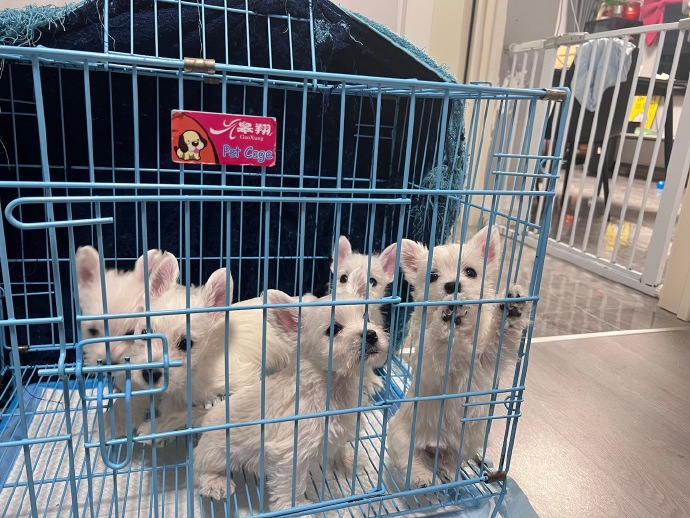
Delayed treatment can be fatal for newborn puppies.

Part 2: Identifying Puppies That Need Help

newborn puppies

9. Ensure the Mother Is Attending to All Her Pups

Be concerned if the mother pushes a particular puppy away instead of keeping it close. A puppy left isolated from its mother and littermates will lack the warmth and nutrition needed to survive.

10. Watch for Warning Signs

Newborns can decline rapidly, often within hours. Watch for these red flags:
  • Cold to the touch, especially around the mouth

  • Weak or absent sucking reflex when a finger is placed in its mouth

  • Poor muscle tone: floppy head, legs that do not retract when gently pulled

  • Inability to nurse

  • Feces around the anus, indicating diarrhea (a serious condition)

  • Discharge from the umbilical cord area

  • Constant, unrelenting crying

11. Monitor All Puppies’ Weight Regularly

Weigh each puppy twice a day using a clean kitchen scale. Measure consistently in grams or ounces. Healthy puppies should not lose weight; after the first day, they should gain roughly 10% of their birth weight daily, a sign they are getting enough milk.


Record weights in a notebook or spreadsheet to track growth during the critical first two weeks.


We have successfully designed and produced over 100 products, successfully entering high-end markets such as the United States, Japan, Germany, France, and Russia.

INFORMATION

CONTACT US

 +86-755-28274716
  +86-13662266273
  sales@hanseektech.com
 Room 1406H, Building C, Hengming Bay Chuanghui Center, Longcheng Street, Longgang District, Shenzhen, China
Copyright ©  2025 Hanseeker Innovation Co., Ltd. All Rights Reserved.