On March 6, 2026, CBP confirmed a $166B historic tariff refund for 330,000 traders, per a Supreme Court ruling deeming past tariffs illegal. Refunds (with interest) start late April 2026 via ACE system, bringing cost relief for global trade.
In 2025, China's urban pet (dog & cat) consumption market reached ¥312.6 billion, a 4.1% YoY increase. Pet food, as the core necessity, hit ¥167.87 billion, accounting for 53.7% of the total market, with a growth rate (5.7%) higher than the industry average. This marks that the pet economy has comprehensively shifted from the early "quantity expansion" stage to the "refined raising" era characterized by "improving per-pet value".
The core data driving this transformation is: the average annual consumption per dog is ¥3006, and per cat is ¥2085, both hitting historical highs. Although the growth rate of pet numbers (1.8%) has slowed, the continuous upgrading of per-pet consumption quality has provided a solid endogenous growth driver for the industry.
1. Consumer Group: High-Education Women in Tier 1/1.5 Cities Lead, Emotional Premium Prominent
The current pet-owning population shows distinct structural characteristics: mainly highly educated, middle-aged and young women, concentrated in first-tier and new first-tier cities. This group has extremely strong emotional dependence on pets, regarding them as "family members" or "emotional companions". Their consumption decisions are not only based on functional needs but also carry profound emotional values.
This "anthropomorphic" parenting concept has directly driven the dual improvement of consumption willingness and payment capacity. They are willing to pay a significant premium for high-quality, high-safety products, and actively study ingredient lists and track raw material sources through social media, becoming the core force driving the industry's upgrading towards high-end and transparency.
2. Staple Food Upgrade: Baked & Freeze-Dried Lead, Functional Foods Become New Growth Engines
In the staple food market, a structural revolution led by technological innovation is deeply underway.
1. Baked Kibble Rises Rapidly
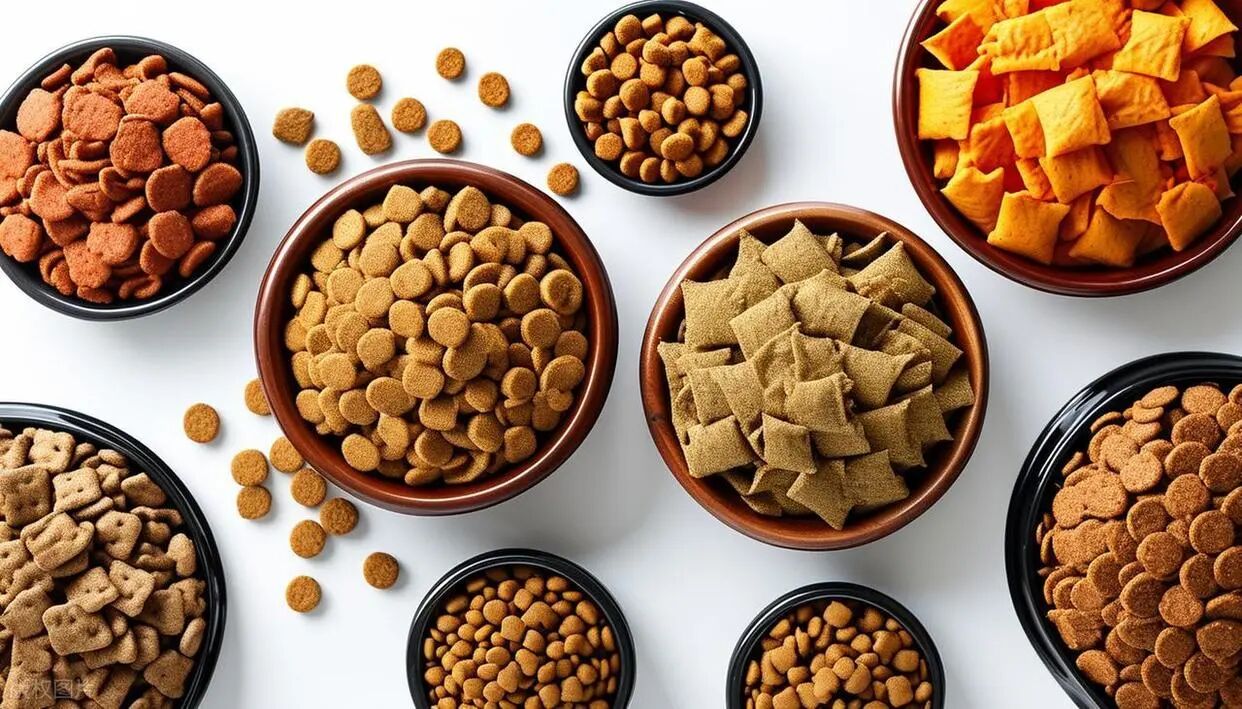
With low-temperature baking technology better retaining nutrition and flavor, baked kibble has become the fastest-growing segment. Its market scale surged from approximately ¥2 billion in 2020 to over ¥8 billion in 2023, with an annual growth rate exceeding 55%.
Brands like Fresh Feed and Fregate have built strong recognition in the mid-to-high-end market through continuous product iteration.
2. Freeze-Dried Kibble Seeps Accelerated
The "freeze-dried +" model (e.g., freeze-dried double mix) has become the market standard, balancing high nutrition retention and palatability. The market penetration rate of freeze-dried staple foods has exceeded 15%, and the compound annual growth rate is expected to remain above 20% in the next six years.
3. Prescription Food Demand Grows
With the aging of pets (23% of dogs and 12% of cats entered the senior stage in 2024) and the improvement of chronic disease management awareness, the prescription food market has grown steadily, reaching ¥5.8 billion in 2024, a YoY increase of 19.2%.
Foreign brands like Royal Canin occupy a leading position with first-mover advantage, but the market share of domestic brands is gradually increasing.
Although traditional expanded kibble still accounts for more than 60% of the market, its growth rate has obviously slowed down. The focus of consumption upgrade is fully turning to mid-to-high-end new process foods characterized by "high fresh meat, low starch, and clean labels".
3. Snack Transformation: From Interactive Rewards to Health Management, Functionalization Reshapes Category Value
The pet snack market is experiencing a profound paradigm shift from "optional consumer goods" to "emotional and health carrier".
1. Interactive Snacks Still Dominate
Meat jerky, cat sticks and other interactive snacks account for 75% of the feeding ratio, occupying an absolute mainstream. Its core value is to strengthen the human-pet emotional bond and training rewards.
2. Functional Snacks Grow Rapidly
The market is shifting from "casual feeding" to "accurately meeting health needs". Specific functional snack categories targeting gastrointestinal conditioning, beauty & skin care, joint care, oral cleaning, emotional relaxation and other aspects are rapidly rising. In 2024, the pet snack market reached ¥44.5 billion, and the purchase motivation of "health maintenance" accounted for 25%, becoming the second largest driving force.
3. Category & Dosage Innovation
Beyond traditional powders and pastes, soft granules, chewing bars and other dosage forms with better palatability and convenience are welcomed. By adding probiotics, postbiotics, functional proteins and other ingredients, brands have upgraded snacks from "seasoning" to part of "health management solutions".
4. Industry Enters "Middle Game", Supply Chain & R&D Determine Victory
In 2026, the pet food industry has bid farewell to the wild growth era of barbaric development and entered the "middle game" stage with "product innovation" and "supply chain efficiency" as the core competitiveness.
High-end and functionalization have become irreversible mainstream trends. The key to future competition lies in whether enterprises can build the entire industry chain capabilities from R&D, production to branding and channels. Those enterprises that can continuously carry out formula innovation, ensure transparent and traceable raw materials, and accurately insight into the emotional needs of the new generation of pet owners will win the opportunity for sustainable growth in this industry upgrade themed by "refined raising".
Pet food is no longer just a commodity related to "fullness", but a comprehensive solution carrying emotion, health and lifestyle. This 100-billion-yuan track is welcoming a golden age of value revaluation.


